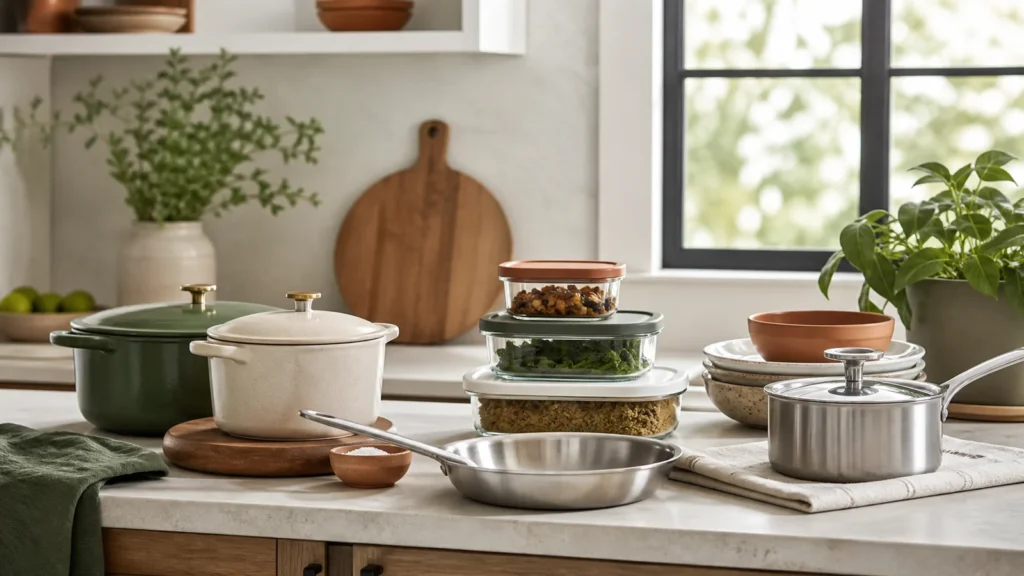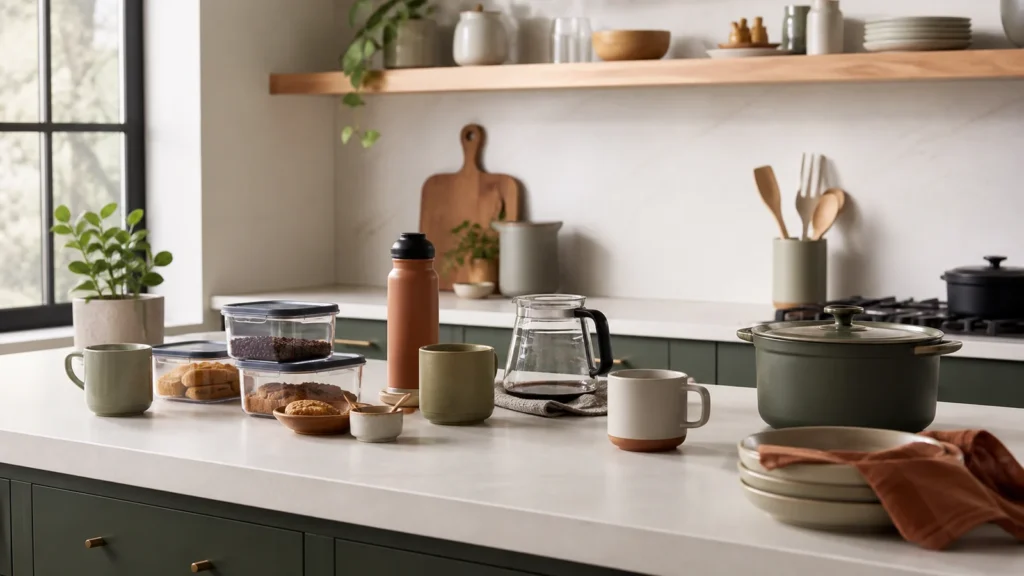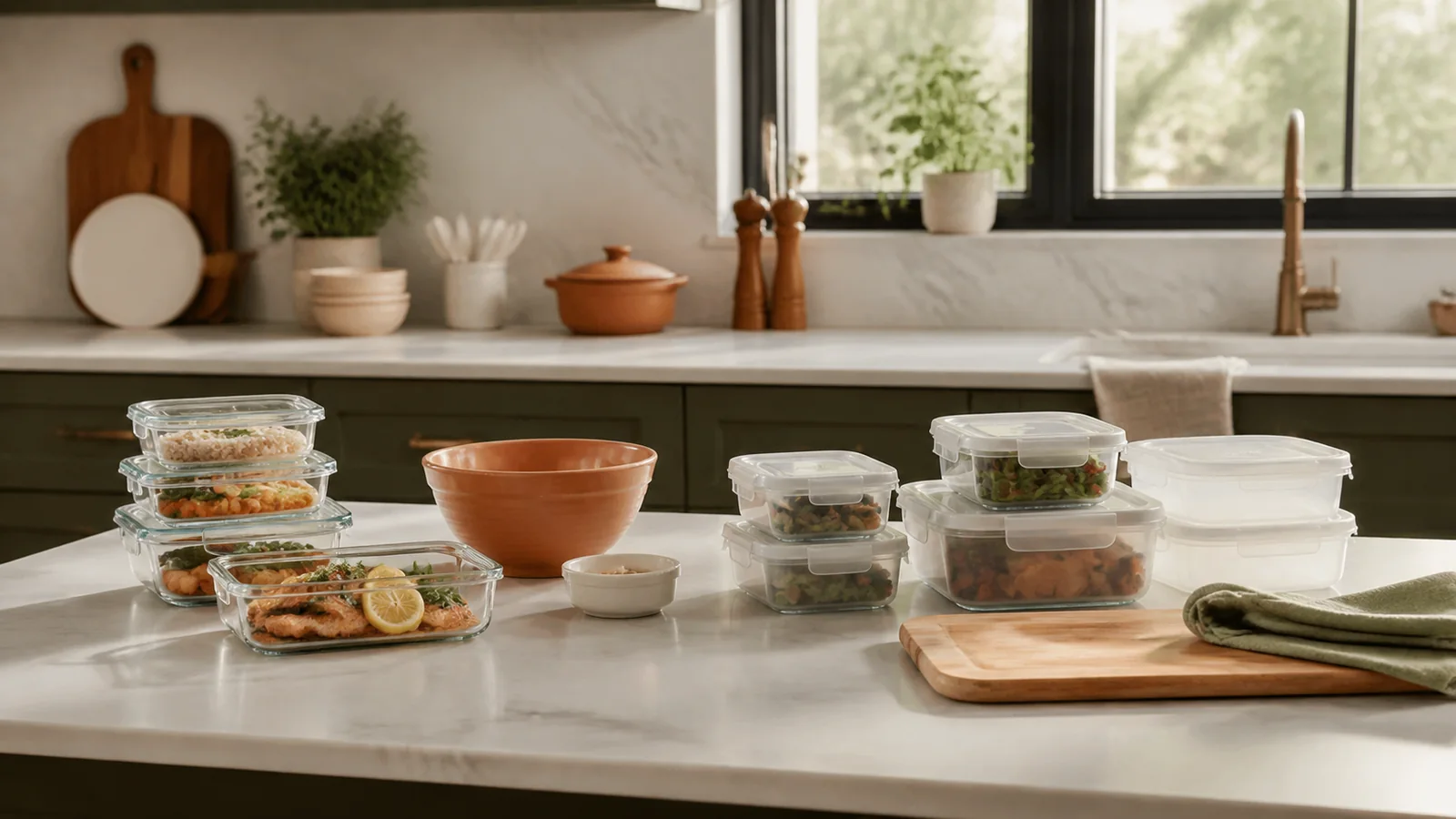
For “Glass vs Plastic Food Containers: Weight, Staining and Storage,” clarity comes from translating a broad category into a small set of documented requirements. For this food, containers, and weight question, keep the source beside every claim about food-contact material or cleaning, then date the note because specifications and seller terms can change. Picture glass vs plastic food containers moving between weekday cooking and coffee preparation; the transition exposes weight, access, storage and cleanup issues that a studio image may hide.
Research note: “Glass vs Plastic Food Containers: Weight, Staining and Storage” is independent desk research for United States consumers; it does not claim hands-on testing, professional credentials or access to unpublished seller information, and readers should check the exact product, instructions, availability and current seller terms before making a decision.
For this food, containers, and weight question, the article can organize published evidence; it cannot replace the current manual, label, safety notice or advice from an appropriately qualified professional. For this food, containers, and weight question, read this principle literally: product instructions and food-safety guidance take priority over shortcuts, especially for temperature, storage and cleaning. For this food, containers, and weight question, use one unit system, one evidence date and the same row order for every candidate; consistency prevents a favored option from receiving easier questions.
What this particular question asks us to notice
The wording of “Glass vs Plastic Food Containers: Weight, Staining and Storage” makes glass, vs, plastic, food, containers, and weight visible as separate priorities. Keeping them separate in this food, containers, and weight analysis prevents one appealing feature from answering several different questions by implication. For this food, containers, and weight decision, the stopping rule is simple: when a priority has no current, product-specific evidence, leave it unresolved until the manufacturer or seller supplies that information. In this article, glass shapes the measurement check; vs shapes the care discussion; plastic shapes the final trade-off; food shapes the use-case test; containers shapes the measurement check; weight shapes the use-case test.
- Glass: record what a seller would need to state before this part of the brief is resolved.
- Vs: identify the acceptable limit first, then reject candidates that do not document it.
- Plastic: connect this priority to fit, upkeep or support instead of treating it as a slogan.
- Food: record what a seller would need to state before this part of the brief is resolved.
Establish the shared job first
Treat “Glass vs Plastic Food Containers: Weight, Staining and Storage” as a sequence of verifiable decisions rather than a search for the most persuasive product page. A realistic trial plan for glass vs plastic food containers should cover small kitchens, the transition to casual hosting and the routine that follows when the item is no longer in use. For this food, containers, and weight question, a label or specification can narrow uncertainty, but it cannot promise comfort, taste, longevity or a particular result for every household.
The difference that matters in practice
For this food, containers, and weight question, do not merge food-contact material with cleaning: one identifies what is being offered while the other explains the practical construction behind it. For this food, containers, and weight question, a specialized heat or temperature limits may deliver the desired appearance yet narrow the acceptable care routine, repair options or long-term flexibility. For this food, containers, and weight question, the broader editorial lesson is that kitchen tools earn their place when they perform a repeated task, clean without friction and store without crowding essential work space.
| Criterion | Glass | Plastic Food Containers |
|---|---|---|
| Food-Contact Material | Record the exact Glass detail and its limit for weekday cooking. | Record the matching Plastic Food Containers detail using the same source and unit. |
| Capacity | Record the exact Glass detail and its limit for weekday cooking. | Record the matching Plastic Food Containers detail using the same source and unit. |
| Heat Or Temperature Limits | Record the exact Glass detail and its limit for weekday cooking. | Record the matching Plastic Food Containers detail using the same source and unit. |
| Cleaning | Record the exact Glass detail and its limit for weekday cooking. | Record the matching Plastic Food Containers detail using the same source and unit. |
| Storage Footprint | Record the exact Glass detail and its limit for weekday cooking. | Record the matching Plastic Food Containers detail using the same source and unit. |
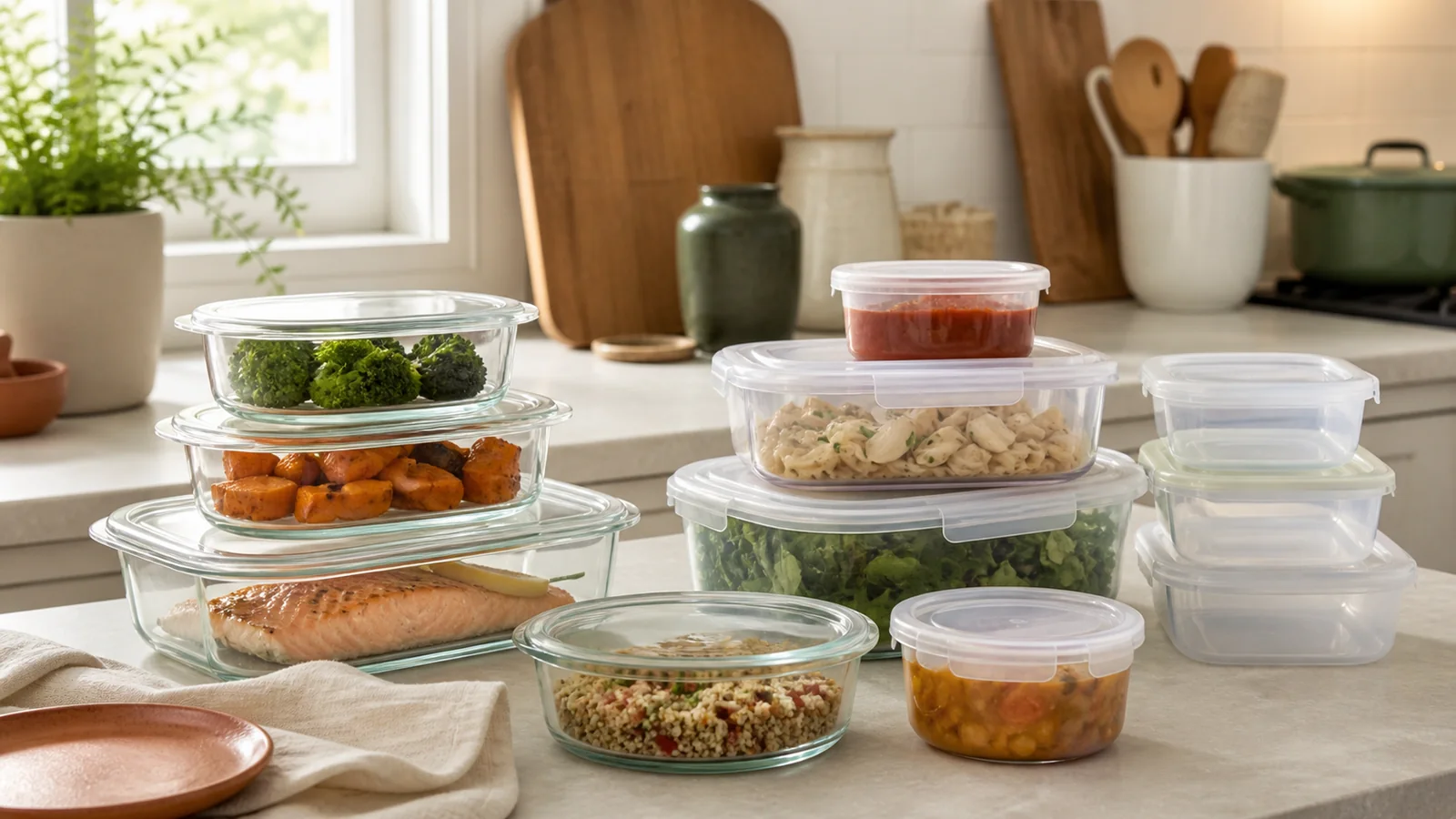
Where Glass can fit well
For glass vs plastic food containers, compare the quiet middle of ownership—handling during coffee preparation, cleanup after small kitchens and storage before leftover storage—rather than only the first use. For this food, containers, and weight question, the sixth-month question is useful: will storage footprint still feel proportionate after the newness has faded and the item must share ordinary storage space? For this food, containers, and weight question, record food-contact material, capacity and heat or temperature limits in separate fields so an attractive photograph cannot quietly stand in for a missing fact.
Where Plastic Food Containers can be the better match
For this food, containers, and weight question, convenience during weekday cooking should be weighed against the storage, cleaning and support work that appears after the immediate task is complete. Imagine the least convenient normal day for glass vs plastic food containers during coffee preparation; a suitable option should remain understandable without special preparation or improvised care. For this food, containers, and weight question, desk research cannot confirm the feel, durability or individual suitability of a product that has not been physically examined, so those outcomes remain open questions.
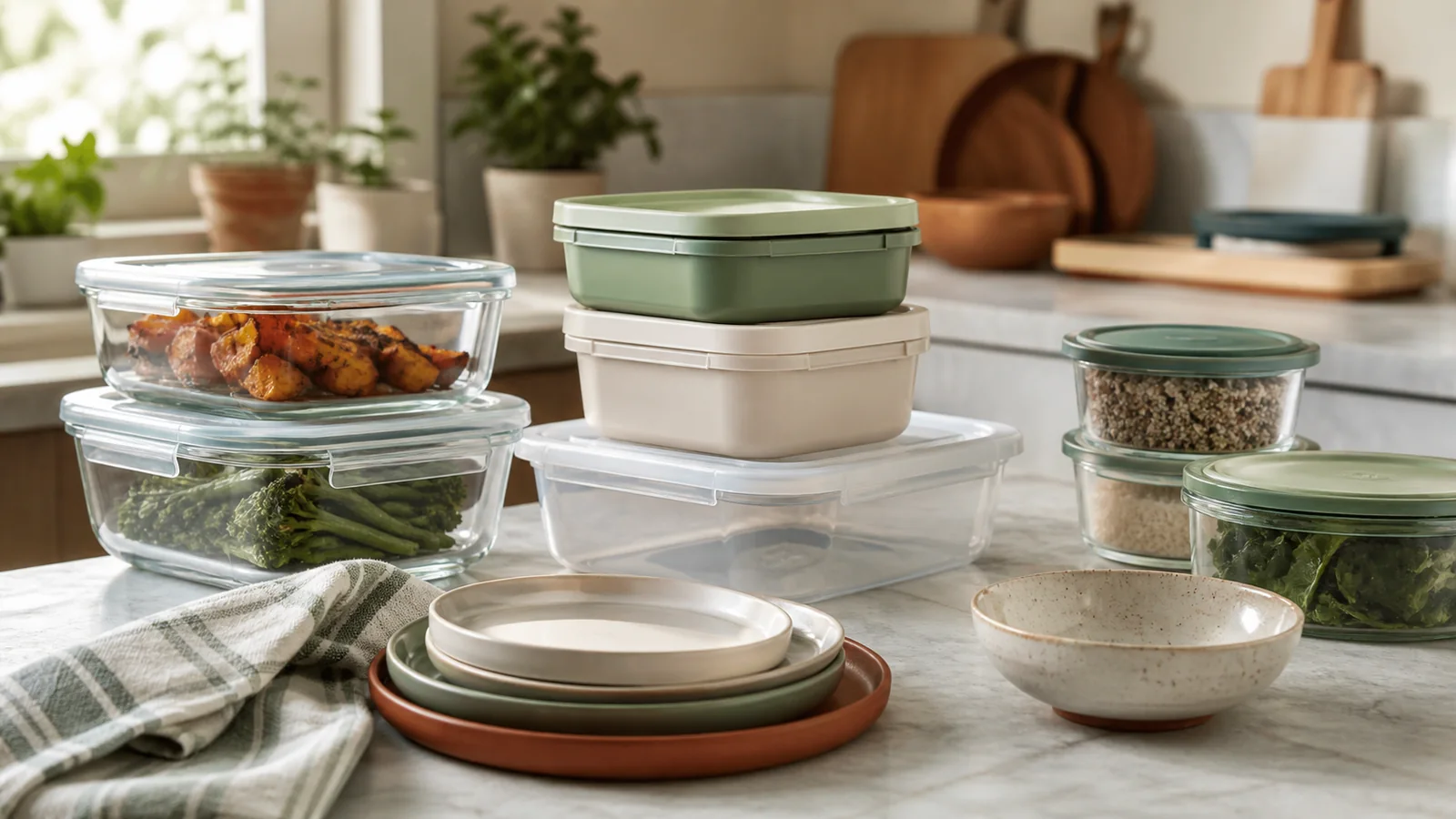
Compare exact products, not idealized formats
For this food, containers, and weight question, limit the working shortlist to three products, mark every unknown and resolve only the unknowns that could change the final decision. For this food, containers, and weight question, useful documentation makes food-contact material specific, gives capacity in comparable terms and explains storage footprint without requiring the reader to infer a routine. Where the seller omits a decisive fact, the responsible conclusion is ‘unresolved,’ not a favorable guess based on similar products in this food, containers, and weight analysis.
Keep returns and support independent
For this food, containers, and weight question, delivery fees, restocking conditions and nonreturnable categories belong in total cost even when they do not appear beside the advertised price. For this food, containers, and weight question, translate each feature into a consequence for weekday cooking; if no practical consequence can be named, the feature should not dominate the comparison. For this food, containers, and weight question, no general guide can account for every body, room, device, animal or routine, which is why product-level fit must be checked independently.
Final reader checklist
- Define the main use case for glass vs plastic food containers and two non-negotiable limits.
- Verify food-contact material, capacity and cleaning for the exact configuration.
- Read storage footprint alongside the normal routine for weekday cooking.
- Save replacement parts, delivery terms and unanswered seller responses.
- Pause when a safety, compatibility or suitability question remains unresolved.
The considered conclusion
For this food, containers, and weight question, the editorial position is that usefulness should be measured through repeated ownership rather than the intensity of the first impression. For this food, containers, and weight question, an advantage in capacity can create a compromise in storage footprint, so both sides belong in the same sentence before a preference is formed. For this food, containers, and weight question, a format-level advantage remains conditional: construction, dimensions and quality control can vary substantially inside the same category.
Sources and verification note
For “Glass vs Plastic Food Containers: Weight, Staining and Storage,” IYI Edit used the following public sources to establish the U.S. consumer context. Product-specific details should be checked again at the point of decision.
- FoodSafety.gov — Keep Food Safe — reviewed August 18, 2026.
- U.S. Food and Drug Administration — Food Labeling & Nutrition — reviewed August 18, 2026.
Last fact-checked: August 18, 2026.