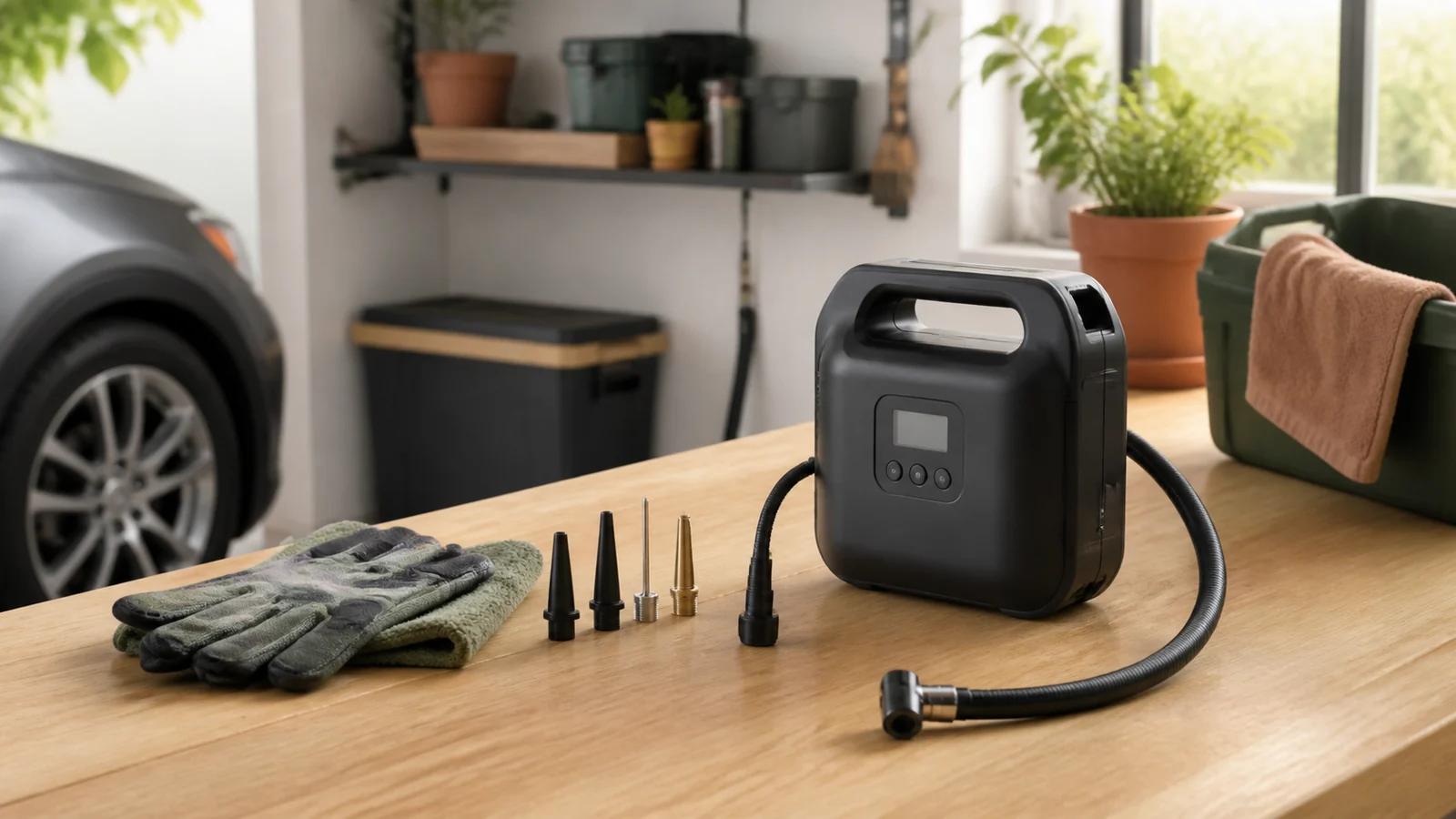
Before comparing products for a portable tire inflator, reduce the brief to one repeated task and two limits that can be checked before delivery. For this inflator, compatibility, and controls question, three details deserve an exact source: secure placement, maintenance and warranty and returns; each can change ownership even when two candidates look similar. If a portable tire inflator must serve both daily commuting and garage storage, document which setting has priority instead of assuming one feature can optimize both.
Research note: “Buying a Portable Tire Inflator: Compatibility, Controls and Storage” is independent desk research for United States consumers; it does not claim hands-on testing, professional credentials or access to unpublished seller information, and readers should check the exact product, instructions, availability and current seller terms before making a decision.
For this inflator, compatibility, and controls question, no general guide can account for every body, room, device, animal or routine, which is why product-level fit must be checked independently. Applied to a portable tire inflator, the relevant caution is straightforward: vehicle year, make, model, trim and factory configuration should be checked before assuming an accessory will fit. For this inflator, compatibility, and controls question, a useful decision record fits on one page: task, dimensions, materials, included parts, care, support, price at review and unresolved questions.
What this particular question asks us to notice
The wording of “Buying a Portable Tire Inflator: Compatibility, Controls and Storage” makes buying, portable, tire, inflator, compatibility, and controls visible as separate priorities. Keeping them separate in this inflator, compatibility, and controls analysis prevents one appealing feature from answering several different questions by implication. For this inflator, compatibility, and controls decision, the stopping rule is simple: when a priority has no current, product-specific evidence, leave it unresolved until the manufacturer or seller supplies that information. In this article, buying shapes the final trade-off; portable shapes the first screening question; tire shapes the first screening question; inflator shapes the use-case test; compatibility shapes the final trade-off; controls shapes the final trade-off.
- Buying: name the evidence date and leave the field open when the current listing is silent.
- Portable: turn this word into a measurable detail and note where that detail is published.
- Tire: write the ownership consequence beside the specification so the trade-off stays visible.
- Inflator: write the ownership consequence beside the specification so the trade-off stays visible.
Define the job before opening the shortlist
The useful question inside “Buying a Portable Tire Inflator: Compatibility, Controls and Storage” is not which listing looks most complete, but which evidence resolves the buyer’s actual uncertainty. A realistic trial plan for a portable tire inflator should cover normal road trips, the transition to seasonal weather and the routine that follows when the item is no longer in use. For this inflator, compatibility, and controls question, a format-level advantage remains conditional: construction, dimensions and quality control can vary substantially inside the same category.
Turn the listing into comparable evidence
For this inflator, compatibility, and controls question, do not merge vehicle compatibility with materials: one identifies what is being offered while the other explains the practical construction behind it. For this inflator, compatibility, and controls question, limit the working shortlist to three products, mark every unknown and resolve only the unknowns that could change the final decision. For this inflator, compatibility, and controls question, read this principle literally: vehicle year, make, model, trim and factory configuration should be checked before assuming an accessory will fit.
| Decision point | Question to resolve | Evidence to keep |
|---|---|---|
| Vehicle Compatibility | State the exact description and any qualifier. | Written seller response saved with the dated listing |
| Dimensions | Use the maker's measurement method and comparable units. | Manufacturer instructions and current U.S. safety information |
| Secure Placement | Connect the visible finish to cleaning and expected handling. | Current first-party product page and supplied documentation |
| Materials | Identify included pieces, joints, fasteners or replaceable parts. | Current first-party product page and supplied documentation |
| Maintenance | Save the documented routine, limits and warning language. | Written seller response saved with the dated listing |
| Warranty And Returns | Record delivery, return, support and written warranty conditions. | Current first-party product page and supplied documentation |
Measure the version that will actually be ordered
For this inflator, compatibility, and controls question, translate each feature into a consequence for daily commuting; if no practical consequence can be named, the feature should not dominate the comparison. For this inflator, compatibility, and controls question, useful documentation makes vehicle compatibility specific, gives dimensions in comparable terms and explains maintenance without requiring the reader to infer a routine. For this inflator, compatibility, and controls question, current availability, configuration, price and policy language sit outside this editorial snapshot and need fresh verification at the point of decision.
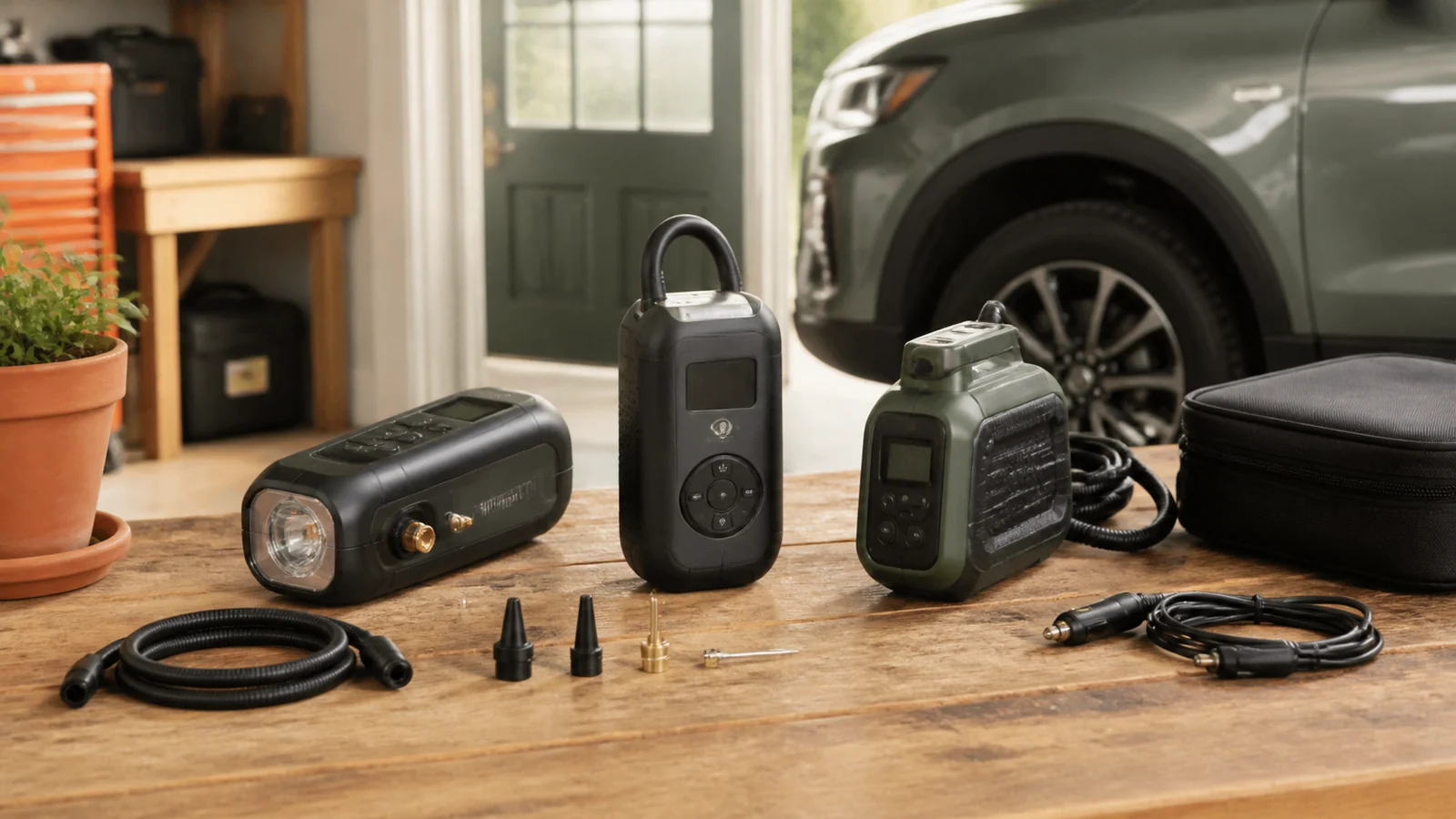
Read materials and construction together
For a U.S. shopper comparing current listings, remember that convenience should never obscure the owner manual, warning labels or clear operation of vehicle controls and safety equipment in this inflator, compatibility, and controls analysis. For this inflator, compatibility, and controls question, lower initial complexity can be valuable, provided it does not hide a missing component, weaker adjustability or a less flexible return path. For this inflator, compatibility, and controls question, keep the source beside every claim about vehicle compatibility or materials, then date the note because specifications and seller terms can change.
Test the decision against an ordinary week
Write a short day-in-use scenario for a portable tire inflator that begins with daily commuting, includes normal road trips and ends with where the item will be stored. For this inflator, compatibility, and controls question, ownership includes setup, repeated handling, cleaning, storage, replacement parts and the effort required to find support when something changes. For this inflator, compatibility, and controls question, an advantage in dimensions can create a compromise in maintenance, so both sides belong in the same sentence before a preference is formed.
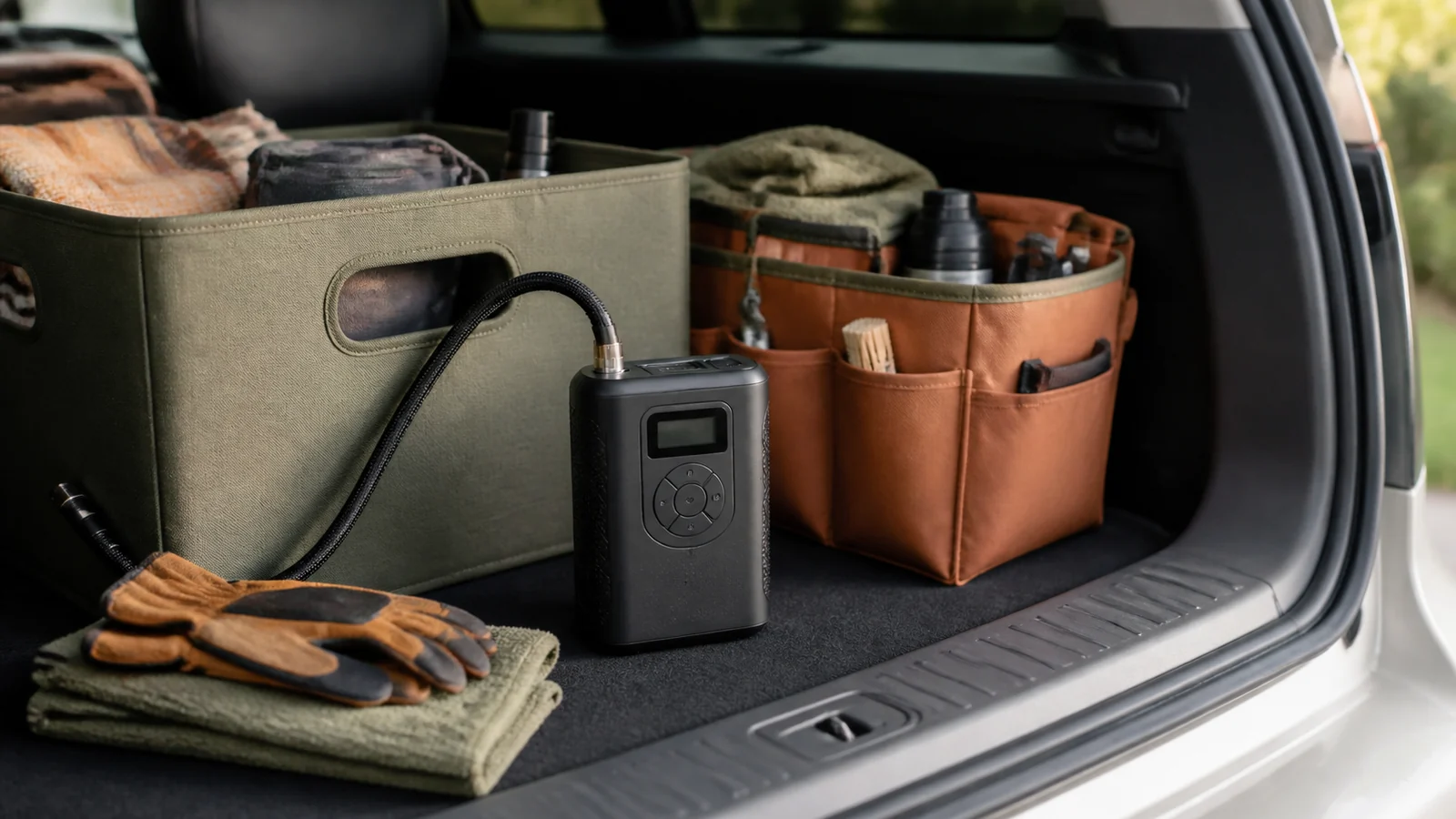
Include service in the product comparison
For this inflator, compatibility, and controls question, a warranty comparison should identify who provides the remedy, what proof is required, where service occurs and whether repair, replacement or refund is offered. For this inflator, compatibility, and controls question, the article can organize published evidence; it cannot replace the current manual, label, safety notice or advice from an appropriately qualified professional. For this inflator, compatibility, and controls question, the true ownership footprint combines physical space, attention, consumables, cleaning time and the likelihood of needing seller assistance.
Final reader checklist
- Define the main use case for a portable tire inflator and two non-negotiable limits.
- Verify vehicle compatibility, dimensions and materials for the exact configuration.
- Read maintenance alongside the normal routine for daily commuting.
- Save warranty and returns, delivery terms and unanswered seller responses.
- Pause when a safety, compatibility or suitability question remains unresolved.
The considered conclusion
For this inflator, compatibility, and controls question, novelty is easy to photograph; the less visible virtues are clear instructions, proportionate upkeep and a fit that survives ordinary repetition. For this inflator, compatibility, and controls question, more materials may improve structure while increasing weight or upkeep; less structure may simplify storage while reducing protection or organization. For this inflator, compatibility, and controls question, desk research cannot confirm the feel, durability or individual suitability of a product that has not been physically examined, so those outcomes remain open questions.
Sources and verification note
For “Buying a Portable Tire Inflator: Compatibility, Controls and Storage,” IYI Edit used the following public sources to establish the U.S. consumer context. Product-specific details should be checked again at the point of decision.
- National Highway Traffic Safety Administration — Tires — reviewed August 18, 2026.
- National Highway Traffic Safety Administration — Summer Driving Tips — reviewed August 18, 2026.
Last fact-checked: August 18, 2026.