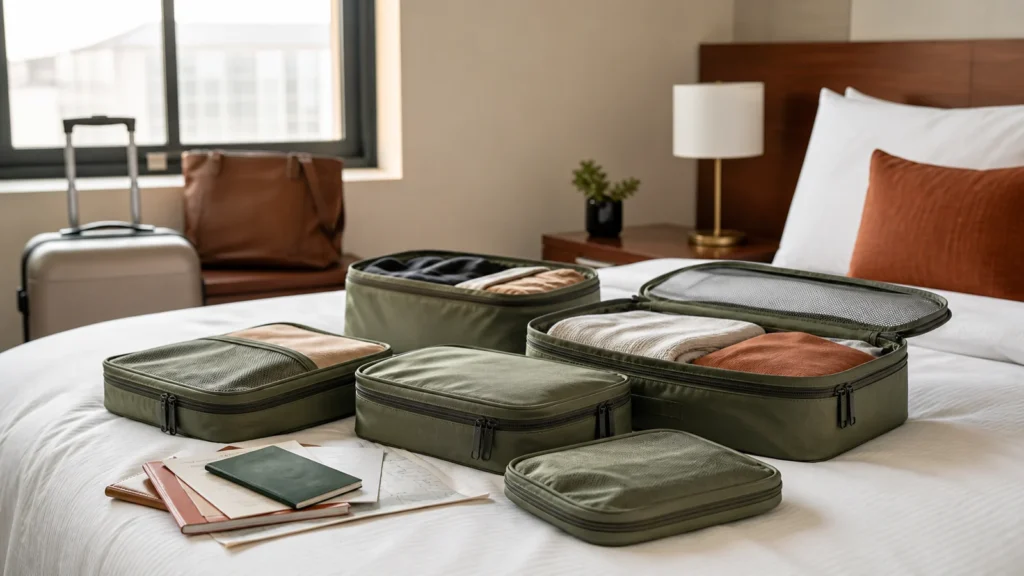
A strong decision about a slower itinerary can create a better travel decision connects the listing to a real routine; it does not reward the longest feature list by default. For this better, travel, and decision question, a listing earns confidence by stating empty weight, showing how organization is achieved and placing change and refund terms where it can be read before checkout. If a slower itinerary can create a better travel decision must serve both domestic flights and short city visits, document which setting has priority instead of assuming one feature can optimize both.
Research note: “A Slower Itinerary Can Create a Better Travel Decision” is independent desk research for United States consumers; it does not claim hands-on testing, professional credentials or access to unpublished seller information, and readers should check the exact product, instructions, availability and current seller terms before making a decision.
Where the seller omits a decisive fact, the responsible conclusion is ‘unresolved,’ not a favorable guess based on similar products in this better, travel, and decision analysis. For a U.S. shopper comparing current listings, remember that a lower headline price may carry stricter change, baggage or service conditions that become part of the real cost in this better, travel, and decision analysis. For this better, travel, and decision question, write two non-negotiables, one acceptable compromise and one reason to postpone; this keeps urgency from becoming an invisible criterion.
What this particular question asks us to notice
The wording of “A Slower Itinerary Can Create a Better Travel Decision” makes slower, itinerary, create, better, travel, and decision visible as separate priorities. Keeping them separate in this better, travel, and decision analysis prevents one appealing feature from answering several different questions by implication. For this better, travel, and decision decision, the stopping rule is simple: when a priority has no current, product-specific evidence, leave it unresolved until the manufacturer or seller supplies that information. In this article, slower shapes the measurement check; itinerary shapes the first screening question; create shapes the final trade-off; better shapes the first screening question; travel shapes the final trade-off; decision shapes the care discussion.
- Slower: turn this word into a measurable detail and note where that detail is published.
- Itinerary: describe the ordinary situation in which this priority would change the choice.
- Create: record what a seller would need to state before this part of the brief is resolved.
- Better: turn this word into a measurable detail and note where that detail is published.
The case for a quieter measure of value
For this better, travel, and decision question, taste remains part of the decision, but taste becomes more durable when it is supported by fit, construction and realistic care. For “A Slower Itinerary Can Create a Better Travel Decision,” clarity comes from translating a broad category into a small set of documented requirements. For this better, travel, and decision question, a reasonable reading of the available guidance is that travel rules vary by carrier, route, fare and property, so current first-party terms should be checked for the exact booking.
Why first impressions receive too much weight
For this better, travel, and decision question, lower initial complexity can be valuable, provided it does not hide a missing component, weaker adjustability or a less flexible return path. For this better, travel, and decision question, considered consumption does not require the cheapest option or the smallest collection—it requires a visible reason for the choice. For this better, travel, and decision question, a format-level advantage remains conditional: construction, dimensions and quality control can vary substantially inside the same category.
| Decision point | Question to resolve | Evidence to keep |
|---|---|---|
| Published Dimensions | State the exact description and any qualifier. | Label, manual or dimension diagram for the exact configuration |
| Empty Weight | Use the maker's measurement method and comparable units. | Manufacturer instructions and current U.S. safety information |
| Organization | Connect the visible finish to cleaning and expected handling. | Label, manual or dimension diagram for the exact configuration |
| Carrier Or Property Rules | Identify included pieces, joints, fasteners or replaceable parts. | Label, manual or dimension diagram for the exact configuration |
| Durability | Save the documented routine, limits and warning language. | Written seller response saved with the dated listing |
| Change And Refund Terms | Record delivery, return, support and written warranty conditions. | Current first-party product page and supplied documentation |
Repetition is a form of evidence
A realistic trial plan for a slower itinerary can create a better travel decision should cover train travel, the transition to hotel stays and the routine that follows when the item is no longer in use. For this better, travel, and decision question, consider what wears first, what can be cleaned, what can be replaced and what would force the whole item out of service. For this better, travel, and decision question, a product earns its place when it removes recurring friction without creating a larger maintenance or storage problem elsewhere.

Unresolved friction carries a cost
For this better, travel, and decision question, the true ownership footprint combines physical space, attention, consumables, cleaning time and the likelihood of needing seller assistance. For this better, travel, and decision question, record published dimensions, empty weight and organization in separate fields so an attractive photograph cannot quietly stand in for a missing fact. For this better, travel, and decision question, convenience during domestic flights should be weighed against the storage, cleaning and support work that appears after the immediate task is complete.
Better questions outlast rigid shopping rules
For this better, travel, and decision question, a useful decision record fits on one page: task, dimensions, materials, included parts, care, support, price at review and unresolved questions. Treat “A Slower Itinerary Can Create a Better Travel Decision” as a sequence of verifiable decisions rather than a search for the most persuasive product page. For this better, travel, and decision question, a specialized organization may deliver the desired appearance yet narrow the acceptable care routine, repair options or long-term flexibility.

Why a publication should state its limits
For this better, travel, and decision question, the absence of private testing is stated plainly here; recommendations are decision frameworks, not claims about an unexamined item. For this better, travel, and decision question, do not merge published dimensions with carrier or property rules: one identifies what is being offered while the other explains the practical construction behind it. For this better, travel, and decision question, the editorial position is that usefulness should be measured through repeated ownership rather than the intensity of the first impression.
Final reader checklist
- Define the main use case for a slower itinerary can create a better travel decision and two non-negotiable limits.
- Verify published dimensions, empty weight and carrier or property rules for the exact configuration.
- Read durability alongside the normal routine for domestic flights.
- Save change and refund terms, delivery terms and unanswered seller responses.
- Pause when a safety, compatibility or suitability question remains unresolved.
The considered conclusion
For this better, travel, and decision question, waiting is not a failed purchase decision when the available evidence does not resolve an important compatibility or ownership question. For this better, travel, and decision question, a premium feature earns its place only when it changes the buyer’s primary scenario rather than adding a benefit that is rarely used. For this better, travel, and decision question, desk research cannot confirm the feel, durability or individual suitability of a product that has not been physically examined, so those outcomes remain open questions.
Sources and verification note
For “A Slower Itinerary Can Create a Better Travel Decision,” IYI Edit used the following public sources to establish the U.S. consumer context. Product-specific details should be checked again at the point of decision.
- U.S. Department of Transportation — Aviation Consumer Protection — reviewed August 18, 2026.
- U.S. Department of Transportation — Buying a Ticket — reviewed August 18, 2026.
Last fact-checked: August 18, 2026.