The useful question inside “A Calm Routine for Storing and Cleaning Everyday Jewelry” is not which listing looks most complete, but which evidence resolves the buyer’s actual uncertainty. For this cleaning, everyday, and jewelry question, keep the source beside every claim about material description or construction, then date the note because specifications and seller terms can change. Imagine the least convenient normal day for storing and cleaning everyday jewelry during occasional wear; a suitable option should remain understandable without special preparation or improvised care.
Research note: “A Calm Routine for Storing and Cleaning Everyday Jewelry” is independent desk research for United States consumers; it does not claim hands-on testing, professional credentials or access to unpublished seller information, and readers should check the exact product, instructions, availability and current seller terms before making a decision.
For this cleaning, everyday, and jewelry question, the absence of private testing is stated plainly here; recommendations are decision frameworks, not claims about an unexamined item. For a U.S. shopper comparing current listings, remember that small differences in closures, posts, edges, chain length and weight can matter more in daily use than a dramatic product photograph suggests in this cleaning, everyday, and jewelry analysis. For this cleaning, everyday, and jewelry question, a useful decision record fits on one page: task, dimensions, materials, included parts, care, support, price at review and unresolved questions.
What this particular question asks us to notice
The wording of “A Calm Routine for Storing and Cleaning Everyday Jewelry” makes calm, routine, storing, cleaning, everyday, and jewelry visible as separate priorities. Keeping them separate in this cleaning, everyday, and jewelry analysis prevents one appealing feature from answering several different questions by implication. For this cleaning, everyday, and jewelry decision, the stopping rule is simple: when a priority has no current, product-specific evidence, leave it unresolved until the manufacturer or seller supplies that information. In this article, calm shapes the use-case test; routine shapes the use-case test; storing shapes the care discussion; cleaning shapes the final trade-off; everyday shapes the use-case test; jewelry shapes the use-case test.
- Calm: compare the exact configuration in the same unit and under the same conditions.
- Routine: connect this priority to fit, upkeep or support instead of treating it as a slogan.
- Storing: turn this word into a measurable detail and note where that detail is published.
- Cleaning: record what a seller would need to state before this part of the brief is resolved.
Identify the material before choosing a method
The subject of storing and cleaning everyday jewelry becomes manageable once appearance, specification, service and ownership are considered separately. For this cleaning, everyday, and jewelry question, do not merge material description with construction: one identifies what is being offered while the other explains the practical construction behind it. For this cleaning, everyday, and jewelry question, current availability, configuration, price and policy language sit outside this editorial snapshot and need fresh verification at the point of decision.
Prepare a conservative care setup
For this cleaning, everyday, and jewelry question, pay special attention to seams, joints, closures and edges because residue or moisture often remains where surfaces meet. For this cleaning, everyday, and jewelry question, separate identity, measurable specification, manufacturer instruction and promotional claim before deciding how much weight each statement deserves. For this cleaning, everyday, and jewelry question, a reasonable reading of the available guidance is that precious-metal language, coatings, treatments and gemstone descriptions should be read literally rather than treated as interchangeable style terms.
| Decision point | Question to resolve | Evidence to keep |
|---|---|---|
| Material Description | State the exact description and any qualifier. | Written seller response saved with the dated listing |
| Dimensions And Fit | Use the maker's measurement method and comparable units. | Label, manual or dimension diagram for the exact configuration |
| Surface Finish | Connect the visible finish to cleaning and expected handling. | Written seller response saved with the dated listing |
| Construction | Identify included pieces, joints, fasteners or replaceable parts. | Label, manual or dimension diagram for the exact configuration |
| Care Requirements | Save the documented routine, limits and warning language. | Manufacturer instructions and current U.S. safety information |
| Seller Policies | Record delivery, return, support and written warranty conditions. | Manufacturer instructions and current U.S. safety information |
Inspect before adding moisture or friction
For this cleaning, everyday, and jewelry question, stop home care when structure, finish, smell or function changes unexpectedly, or when the documented method does not address the condition. For this cleaning, everyday, and jewelry question, the article can organize published evidence; it cannot replace the current manual, label, safety notice or advice from an appropriately qualified professional. For this cleaning, everyday, and jewelry question, a listing earns confidence by stating dimensions and fit, showing how surface finish is achieved and placing seller policies where it can be read before checkout.
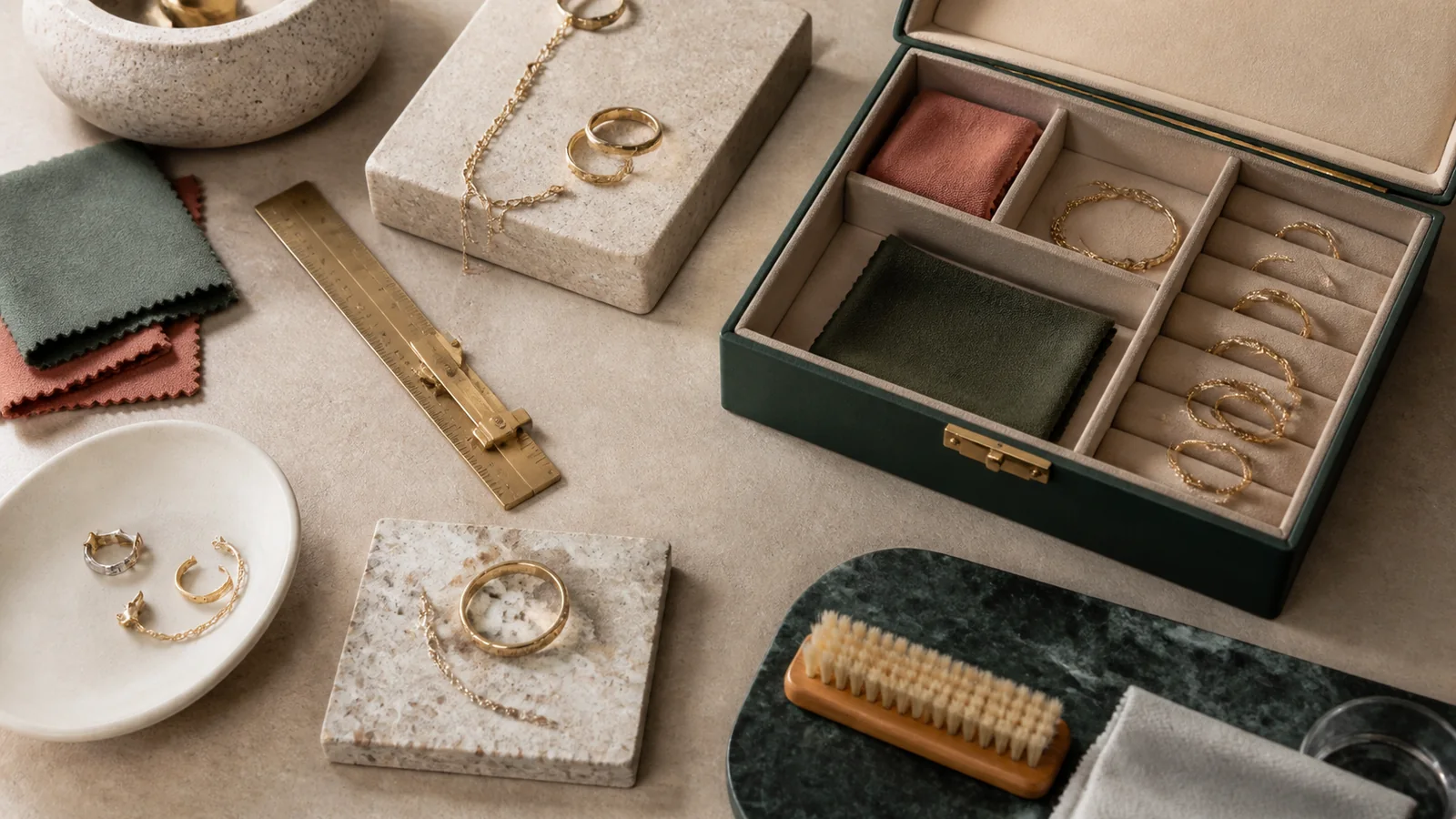
Clean in a repeatable sequence
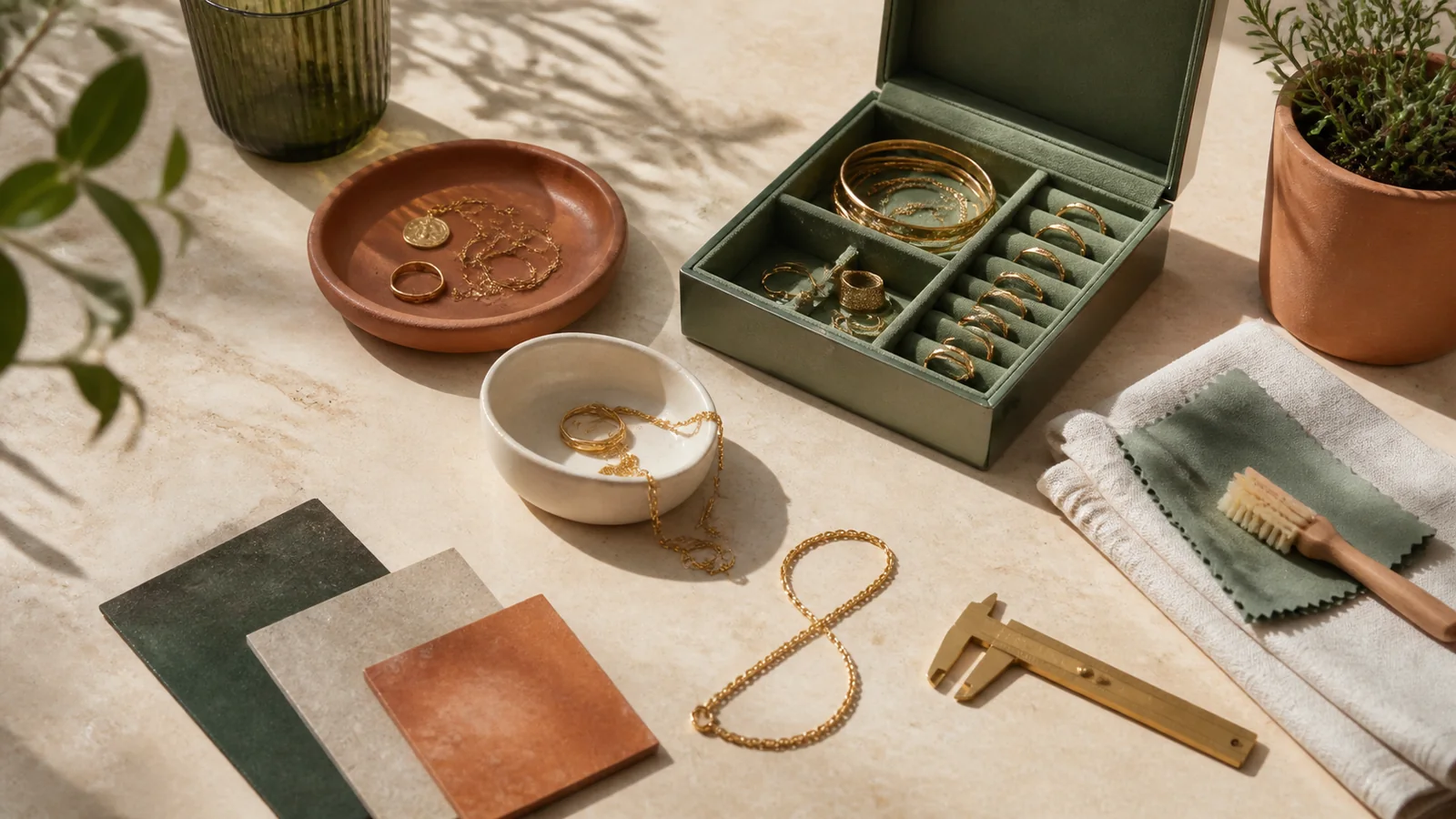
For this cleaning, everyday, and jewelry question, use one unit system, one evidence date and the same row order for every candidate; consistency prevents a favored option from receiving easier questions. For this cleaning, everyday, and jewelry question, separate materials that require different treatment, keep dedicated tools clean and avoid combining products unless the maker explicitly allows it. For storing and cleaning everyday jewelry, compare the quiet middle of ownership—handling during occasional wear, cleanup after gift giving and storage before long-term storage—rather than only the first use.
Treat drying as part of the process
For this cleaning, everyday, and jewelry question, link light care to use and deeper care to visible need rather than applying an arbitrary schedule to every material. For this cleaning, everyday, and jewelry question, the true ownership footprint combines physical space, attention, consumables, cleaning time and the likelihood of needing seller assistance. For this cleaning, everyday, and jewelry question, the best-described option is not automatically the best fit, but clear limits make its trade-offs easier to accept or reject deliberately.
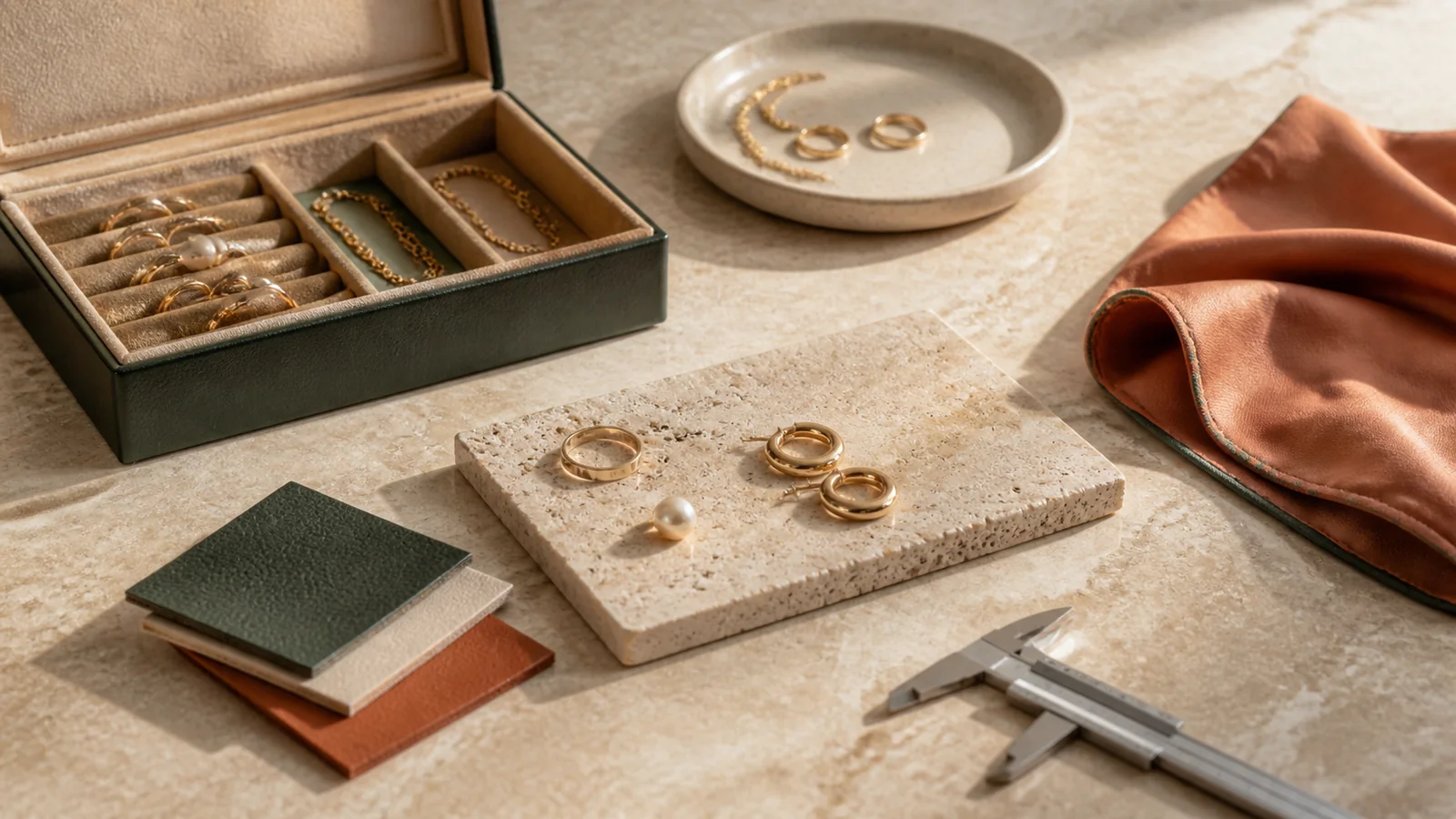
Recognize the point to stop
For this cleaning, everyday, and jewelry question, desk research cannot confirm the feel, durability or individual suitability of a product that has not been physically examined, so those outcomes remain open questions. For this cleaning, everyday, and jewelry question, read seller policies for exclusions as carefully as for benefits, especially when opening, assembly, personalization or use may change eligibility. For this cleaning, everyday, and jewelry question, a small, repeatable kit is preferable to a shelf of improvised treatments whose compatibility with material description is unknown.
Final reader checklist
- Define the main use case for storing and cleaning everyday jewelry and two non-negotiable limits.
- Verify material description, dimensions and fit and construction for the exact configuration.
- Read care requirements alongside the normal routine for daily wear.
- Save seller policies, delivery terms and unanswered seller responses.
- Pause when a safety, compatibility or suitability question remains unresolved.
The considered conclusion
For this cleaning, everyday, and jewelry question, the most useful recommendation explains who may prefer another trade-off and which missing fact could change the conclusion. For this cleaning, everyday, and jewelry question, a premium feature earns its place only when it changes the buyer’s primary scenario rather than adding a benefit that is rarely used. For this cleaning, everyday, and jewelry question, a label or specification can narrow uncertainty, but it cannot promise comfort, taste, longevity or a particular result for every household.
Sources and verification note
For “A Calm Routine for Storing and Cleaning Everyday Jewelry,” IYI Edit used the following public sources to establish the U.S. consumer context. Product-specific details should be checked again at the point of decision.
- Federal Trade Commission — Jewelry Guides — reviewed August 18, 2026.
- Federal Trade Commission — Advertising and Marketing Basics — reviewed August 18, 2026.
Last fact-checked: August 18, 2026.