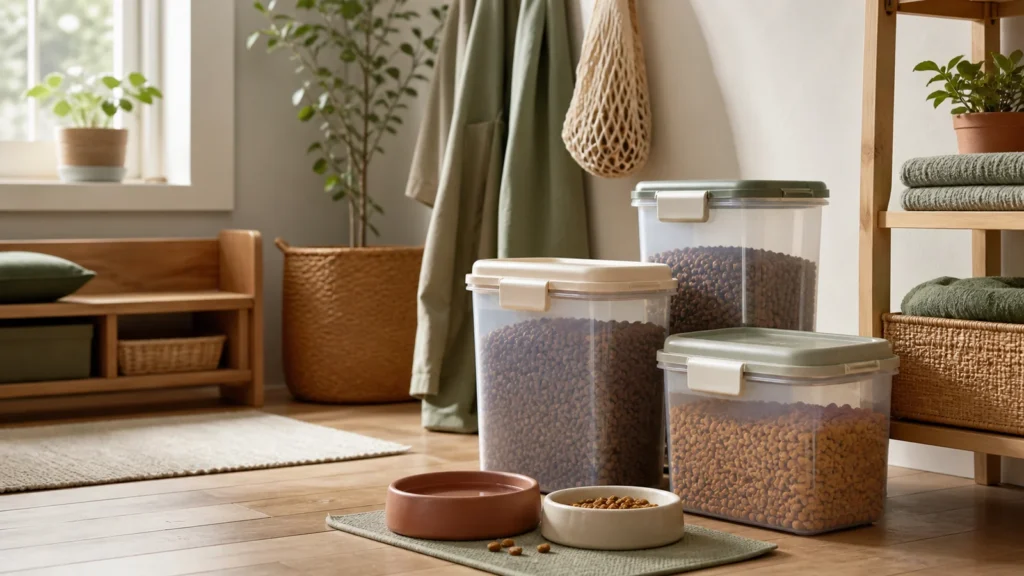
The subject of a pet food label without turning it into a diagnosis becomes manageable once appearance, specification, service and ownership are considered separately. For this label, turning, and into question, the entry for materials addresses fit, the record for secure construction explains how the object is made, and the documented manufacturer guidance govern what happens if the match is wrong. For a pet food label without turning it into a diagnosis, compare the quiet middle of ownership—handling during car trips, cleanup after apartment living and storage before supervised outdoor time—rather than only the first use.
Research note: “How to Read a Pet Food Label Without Turning It Into a Diagnosis” is independent desk research for United States consumers; it does not claim hands-on testing, professional credentials or access to unpublished seller information, and readers should check the exact product, instructions, availability and current seller terms before making a decision.
For this label, turning, and into question, desk research cannot confirm the feel, durability or individual suitability of a product that has not been physically examined, so those outcomes remain open questions. For this label, turning, and into question, the broader editorial lesson is that food and care claims should be read from the complete label and discussed with a veterinarian when health circumstances are involved. For this label, turning, and into question, translate each feature into a consequence for daily routines; if no practical consequence can be named, the feature should not dominate the comparison.
What this particular question asks us to notice
The wording of “How to Read a Pet Food Label Without Turning It Into a Diagnosis” makes read, pet, food, label, turning, and into visible as separate priorities. Keeping them separate in this label, turning, and into analysis prevents one appealing feature from answering several different questions by implication. For this label, turning, and into decision, the stopping rule is simple: when a priority has no current, product-specific evidence, leave it unresolved until the manufacturer or seller supplies that information. In this article, read shapes the final trade-off; pet shapes the use-case test; food shapes the final trade-off; label shapes the measurement check; turning shapes the final trade-off; into shapes the care discussion.
- Read: compare the exact configuration in the same unit and under the same conditions.
- Pet: record what a seller would need to state before this part of the brief is resolved.
- Food: record what a seller would need to state before this part of the brief is resolved.
- Label: write the ownership consequence beside the specification so the trade-off stays visible.
Start with a plain-language definition
Instead of asking for a universal winner in a pet food label without turning it into a diagnosis, ask what must remain true after setup, cleaning and several months of normal use. For this label, turning, and into question, one practical implication is this: washability, closures, seams and access to product information often matter more over time than decorative styling. For this label, turning, and into question, current availability, configuration, price and policy language sit outside this editorial snapshot and need fresh verification at the point of decision.
Separate identity, specification and claim
For this label, turning, and into question, write two non-negotiables, one acceptable compromise and one reason to postpone; this keeps urgency from becoming an invisible criterion. For this label, turning, and into question, keep the source beside every claim about animal size and behavior or secure construction, then date the note because specifications and seller terms can change. For this label, turning, and into question, read this principle literally: pet-product fit depends on the individual animal, setting and intended use, so general shopping guidance cannot replace professional advice.
| Decision point | Question to resolve | Evidence to keep |
|---|---|---|
| Animal Size And Behavior | State the exact description and any qualifier. | Label, manual or dimension diagram for the exact configuration |
| Materials | Use the maker's measurement method and comparable units. | Label, manual or dimension diagram for the exact configuration |
| Cleanability | Connect the visible finish to cleaning and expected handling. | Manufacturer instructions and current U.S. safety information |
| Secure Construction | Identify included pieces, joints, fasteners or replaceable parts. | Label, manual or dimension diagram for the exact configuration |
| Storage | Save the documented routine, limits and warning language. | Current first-party product page and supplied documentation |
| Manufacturer Guidance | Record delivery, return, support and written warranty conditions. | Label, manual or dimension diagram for the exact configuration |
Notice the qualifiers around the headline term
For this label, turning, and into question, three details deserve an exact source: cleanability, storage and manufacturer guidance; each can change ownership even when two candidates look similar. For this label, turning, and into question, a label or specification can narrow uncertainty, but it cannot promise comfort, taste, longevity or a particular result for every household. For this label, turning, and into question, convenience during daily routines should be weighed against the storage, cleaning and support work that appears after the immediate task is complete.

Why an omitted detail remains important
Where the seller omits a decisive fact, the responsible conclusion is ‘unresolved,’ not a favorable guess based on similar products in this label, turning, and into analysis. For this label, turning, and into question, a listing earns confidence by stating materials, showing how cleanability is achieved and placing manufacturer guidance where it can be read before checkout. For this label, turning, and into question, a warranty comparison should identify who provides the remedy, what proof is required, where service occurs and whether repair, replacement or refund is offered.
Apply the explanation to two current listings
An approach to a pet food label without turning it into a diagnosis suited to daily routines can be inconvenient during home storage, so test both situations against the same non-negotiable requirements. For this label, turning, and into question, do not merge animal size and behavior with secure construction: one identifies what is being offered while the other explains the practical construction behind it. For this label, turning, and into question, finish by explaining why the chosen trade-off fits this routine, not by turning several unlike qualities into a single score.

Know what to verify before acting
For this label, turning, and into question, read manufacturer guidance for exclusions as carefully as for benefits, especially when opening, assembly, personalization or use may change eligibility. For this label, turning, and into question, the article can organize published evidence; it cannot replace the current manual, label, safety notice or advice from an appropriately qualified professional. For this label, turning, and into question, taste remains part of the decision, but taste becomes more durable when it is supported by fit, construction and realistic care.
Final reader checklist
- Define the main use case for a pet food label without turning it into a diagnosis and two non-negotiable limits.
- Verify animal size and behavior, materials and secure construction for the exact configuration.
- Read storage alongside the normal routine for daily routines.
- Save manufacturer guidance, delivery terms and unanswered seller responses.
- Pause when a safety, compatibility or suitability question remains unresolved.
The considered conclusion
For this label, turning, and into question, the editorial position is that usefulness should be measured through repeated ownership rather than the intensity of the first impression. For this label, turning, and into question, lower initial complexity can be valuable, provided it does not hide a missing component, weaker adjustability or a less flexible return path. For this label, turning, and into question, no general guide can account for every body, room, device, animal or routine, which is why product-level fit must be checked independently.
Sources and verification note
For “How to Read a Pet Food Label Without Turning It Into a Diagnosis,” IYI Edit used the following public sources to establish the U.S. consumer context. Product-specific details should be checked again at the point of decision.
- U.S. Food and Drug Administration — Animal Food Labeling and Pet Food Claims — reviewed August 18, 2026.
- U.S. Food and Drug Administration — Proper Storage of Pet Food and Treats — reviewed August 18, 2026.
Last fact-checked: August 18, 2026.